
Lifting, resurfacing & panel replacement
Concrete Repair & Leveling in St. Louis, MO
A straight answer on whether your slab can be saved, with the repair and replacement priced side by side.
- Free on-site measuring and a written, itemized quote
- Public sidewalk rules and city programs explained before work starts
- Repair options priced next to replacement when a slab can be saved
Save the Slab When You Can
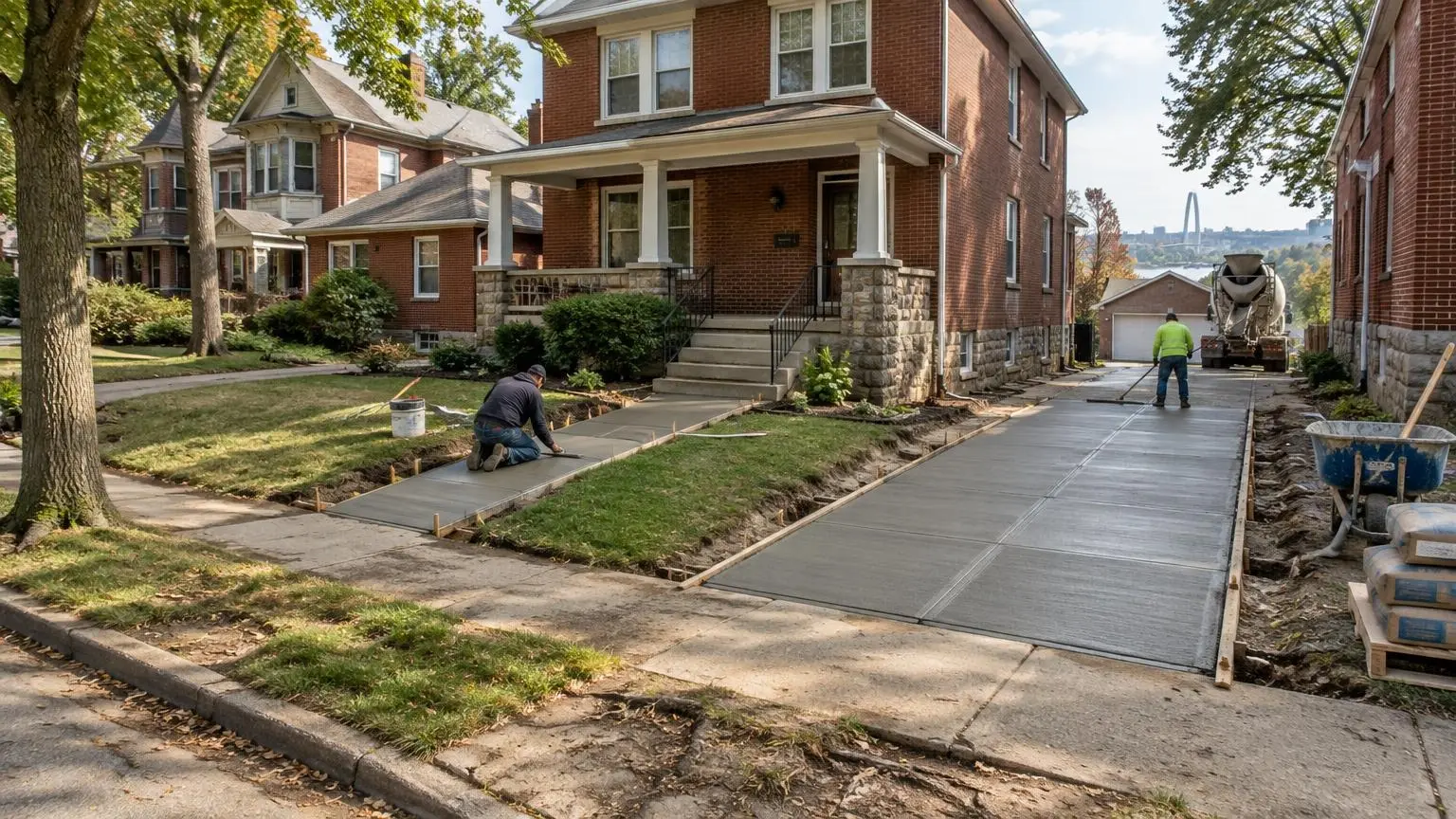
Concrete repair and leveling can save a driveway, walk, patio or stoop for a fraction of the cost of new concrete, but only when the problem is on the surface or the slab is still in one piece. In St. Louis, freeze-thaw winters, old fill around century-old houses and water from downspouts and gangways all cause slabs to sink and flake. We find the cause first, then show you what a repair would cost next to replacement.
Matching the fix to the damage
- A sunken or tilted panel in one piece: leveling can usually raise it back into place.
- A panel broken into several pieces: usually needs to be cut out and replaced.
- Light scaling on a sound slab: a bonded resurfacing layer gives it a new top.
- Hairline cracks: cleaned and sealed to keep water out.
- Wide cracks: HomeGuide's resurfacing guide says cracks wider than 1/4 inch usually point to a foundation problem and can return through a new surface, so those sections usually come out.
- Broken edges and step corners: cut back and re-poured.
Mudjacking and foam lifting
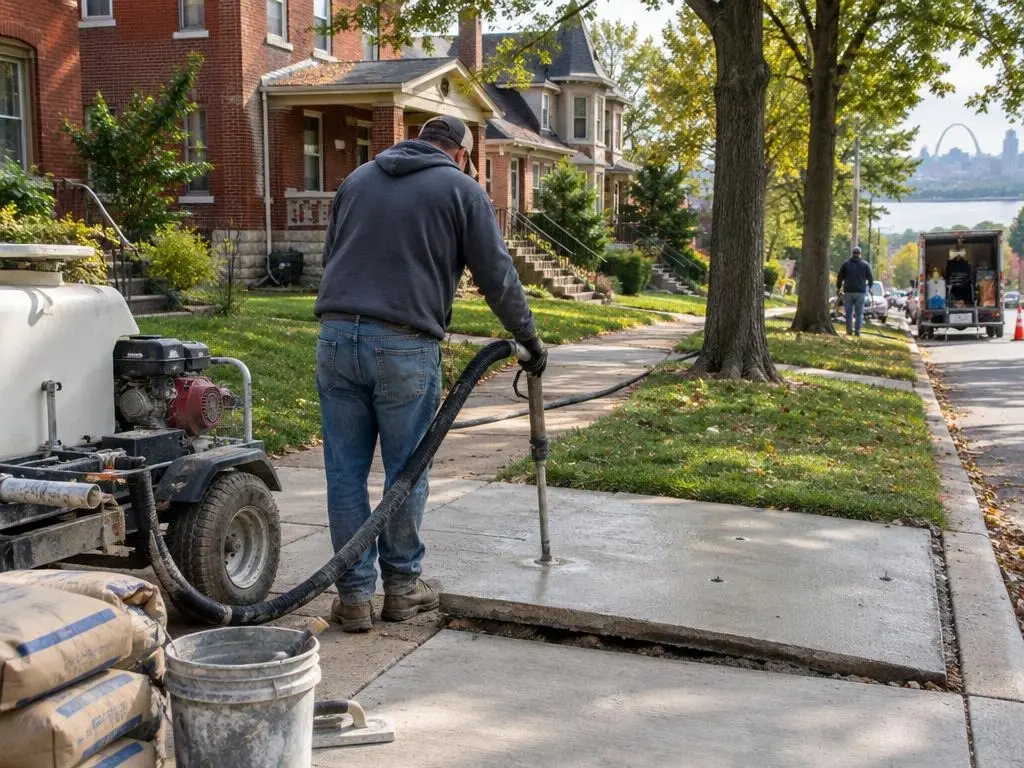
Leveling raises a sunken slab by pumping material under it through small drilled holes. Mudjacking uses a cement-based slurry. Polyjacking uses expanding polyurethane foam, which is lighter and needs smaller holes. Both fill the void that let the slab drop. HomeGuide's leveling guide says professionally leveled concrete generally lasts 5 to 10 years or more, with mudjacking typically 5 to 7 years and polyjacking often longest. It works well on walks, stoops, patios and driveway panels that have dropped near the house or garage.
When sinking keeps coming back
Most settling we see comes from water washing out the soil under a slab, or from loose fill placed when the house was built. Fixing the water, by extending downspouts or regrading, is part of a lasting repair. Wikipedia also notes that parts of St. Louis are karst, with numerous sinkholes and caves south of downtown. If a slab keeps dropping in the same spot after it has been lifted, we will tell you it needs a closer look rather than pumping it again.
Resurfacing
Resurfacing bonds a thin new layer to old concrete. It suits a slab that is level and structurally sound but has lost its surface to salt and freeze-thaw. Prep decides how long it lasts: we clean the surface and remove loose material so the new layer bonds. HomeGuide says resurfacing typically lasts 8 to 15 years and recommends replacement instead for large cracks, crumbling, heavy spalling or a repair that would need a layer more than 2 inches thick.
Replacing a few panels
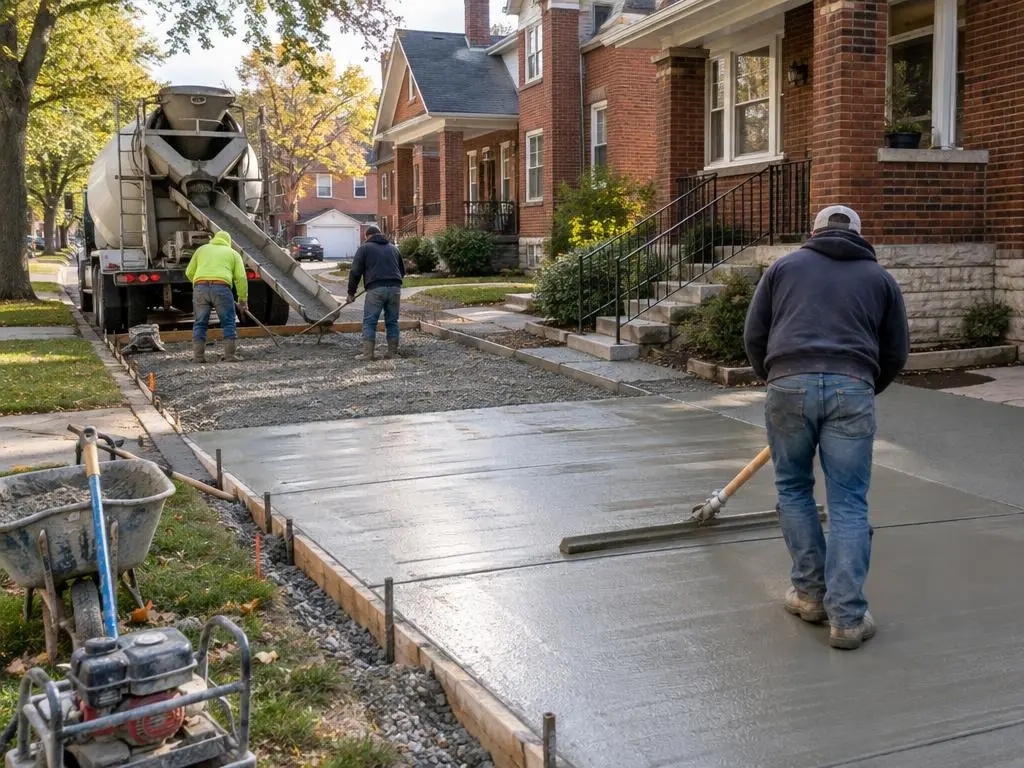
A few bad sections do not always mean a whole new driveway or walk. We saw-cut the failed panels out along joint lines, rebuild the base and pour new sections doweled into the old concrete. New concrete looks lighter than weathered concrete at first and blends in over time. If the bad panels are in the public sidewalk in front of a city home, remember that the 50-50 Sidewalk Program may cover half, or all of it if a City tree caused the damage.
When it is time to replace
- Scaling, cracking or settling across most of the slab
- A base that washed out or was never built properly
- A slab that sends water toward the house
- Patches that fail every spring
In those cases we price new concrete and explain why a repair would not last.
Repair Options
Different damage calls for different fixes; we match the method to the cause.
Mudjacking
Cement-based slurry pumped under a sunken slab to lift and support it.
Foam lifting
Polyurethane foam injected through small holes to raise a slab.
Crack sealing
Cracks cleaned and filled to keep water and ice out.
Resurfacing
A bonded new layer over scaled but sound concrete.
Panel replacement
Failed sections cut out and re-poured, doweled to the old slab.
Drainage fixes
Downspout extensions and regrading so the problem does not return.
Typical Repair and Leveling Costs
| Item | Published range |
|---|---|
| Mudjacking, per sq ft | $4 to $9 |
| Polyjacking (foam), per sq ft | $8 to $25 |
| Leveling minimum job | $300 to $700 |
| Mudjacking a 100 sq ft sidewalk | $400 to $900 |
| Mudjacking steps (about 40 sq ft) | $300 to $700 |
| Resurfacing a driveway, per sq ft | $3 to $5 |
| Resurfacing a patio or walk, per sq ft | $3 to $7 |
| Crack filling, per linear ft | $0.50 to $3 |
Figures from HomeGuide's concrete leveling and concrete resurfacing cost guides (national averages). St. Louis prices can run higher or lower depending on size, access and materials. Your written estimate is the price.
How It Works
1. Find the cause
We look at drainage, soil, cracks and how the slab moved.
2. Price the options
Repair and replacement priced side by side in writing.
3. Repair
Lifting, resurfacing, sealing or panel replacement as quoted.
4. Stop it recurring
Downspouts and grading fixed so water stays out from under the slab.
Why Choose Us for Concrete Repair & Leveling
Both options on paper
Repair and replacement priced together so you can choose.
Cause before cure
We deal with the water that sank the slab, not just the slab.
Concrete Repair & Leveling Questions
Is mudjacking or foam better?
Both lift slabs. HomeGuide lists mudjacking at $4 to $9 a square foot and polyjacking at $8 to $25, with foam often lasting longest and needing smaller holes. Mudjacking is the lower-cost choice for many walks and patios.
How long does leveling last?
HomeGuide says 5 to 10 years or more depending on method and soil, with mudjacking typically 5 to 7. Fixing the drainage that caused the sinking makes the biggest difference.
Can scaled concrete be fixed?
If the slab is level and solid, resurfacing can give it a new surface; HomeGuide says it typically lasts 8 to 15 years. Deep scaling over most of the slab, or wide cracks, usually means replacement.
When should I replace instead of repair?
HomeGuide points to cracks wider than 1/4 inch, heavy spalling and severe deterioration as signs replacement is the better choice. Replacement runs about $6 to $15 a square foot in its guide.
Concrete Repair & Leveling Service Areas
- Concrete Contractors in St. Louis, MO
- Concrete Contractors in Florissant, MO
- Concrete Contractors in Chesterfield, MO
- Concrete Contractors in St. Charles, MO
- Concrete Contractors in St. Peters, MO
- Concrete Contractors in O'Fallon, MO
- Concrete Contractors in Kirkwood, MO
- Concrete Contractors in Webster Groves, MO
- Concrete Contractors in University City, MO
- Concrete Contractors in Ballwin, MO
- Concrete Contractors in Wildwood, MO
- Concrete Contractors in Maryland Heights, MO
- Concrete Contractors in Hazelwood, MO
- Concrete Contractors in Creve Coeur, MO
- Concrete Contractors in Clayton, MO
- Concrete Contractors in Ladue, MO
- Concrete Contractors in Oakville, MO
- Concrete Contractors in Mehlville, MO
- Concrete Contractors in Affton, MO
- Concrete Contractors in Arnold, MO
- Concrete Contractors in Manchester, MO
- Concrete Contractors in Ferguson, MO
- Concrete Contractors in Town and Country, MO
- Concrete Contractors in Overland, MO
- Concrete Contractors in Bridgeton, MO
- Concrete Contractors in Sunset Hills, MO
Get a Concrete Repair & Leveling Estimate
Free on-site assessments for sunken, cracked and flaking concrete in St. Louis and nearby towns.